🚢 RMS LUSITANIA 🚢
THE LUXURY OCEAN LINER THAT CHANGED HISTORY!
🏛️ A NAME WITH AN ANCIENT PAST!
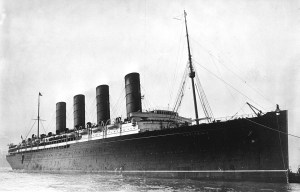
The Lusitania was named after an ancient Roman province that covered much of present-day Portugal and parts of western Spain. Built in Scotland for Britain’s Cunard Line, the magnificent ocean liner began carrying passengers across the Atlantic in 1907.
🏆 THE QUEEN OF ATLANTIC SPEED!
In October 1907, the Lusitania captured the prestigious Blue Riband for a record-breaking westbound Atlantic crossing. She completed the journey in less than five days, making her one of the fastest passenger ships of her era.
⚙️ FOUR FUNNELS AND MILLIONS OF RIVETS!
The Lusitania stretched approximately 787 feet from bow to stern and featured four towering funnels. More than four million rivets helped hold the enormous vessel together, while powerful steam turbines drove four propellers through the ocean.
🎩 A VANDERBILT ABOARD!
Among the notable passengers on the Lusitania’s final voyage was Alfred Gwynne Vanderbilt, a wealthy member of the famous American family. The passenger list also included Broadway producer Charles Frohman, illustrating how the liner attracted prominent travelers from both sides of the Atlantic.
🌊 EIGHTEEN MINUTES THAT SHOOK THE WORLD!
On May 7, 1915, during World War I, a German submarine torpedoed the Lusitania near the Irish coast. The ship sank in just eighteen minutes, and the tragedy caused international outrage, particularly in the United States.
🤿 A HISTORIC SHIP BENEATH THE WAVES!
The wreck of the Lusitania still rests approximately 300 feet beneath the Atlantic, near the Old Head of Kinsale in Ireland. More than a century later, the remains continue to attract historical interest and research into one of the most consequential maritime disasters of World War I.
📚 SOURCES

